

Serengeti National Park lies in northern Tanzania within the Mara and Simiyu regions. It forms part of the larger Serengeti ecosystem which extends beyond the park into surrounding conservation areas and Maasai Mara National Reserve.
The park covers approximately 14,750 square kilometres. Serengeti National Park was established in 1951 and became a UNESCO World Heritage Site in 1981. The park is famous for its open grasslands, large herds of wildebeest and zebras and predators such as lions, cheetahs and leopards.
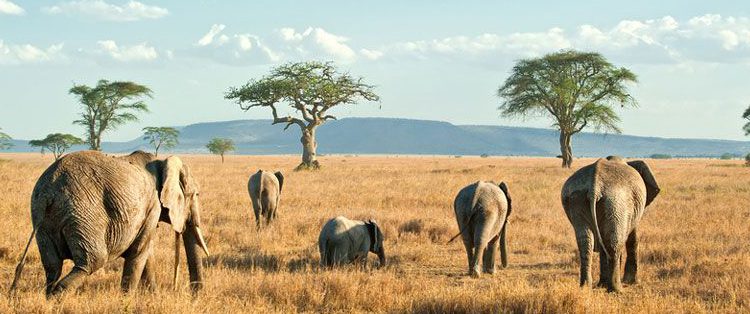
Flora in Serengeti National Park
Serengeti’s vegetation ranges from short grasslands to thorny savannah, woodland and riverine forest. The plants found in each area depend on rainfall, soil conditions, grazing and seasonal fires. Grasses dominate large parts of the southeastern plains. Red oat grass and species from the Sporobolus and Digitaria genera occur in the grassland ecosystem. These plants provide food for wildebeest, zebras, gazelles and other grazing animals.
Wooded areas contain trees and shrubs from the Vachellia genus formerly classified as Acacia alongside species of Terminalia, Combretum and Commiphora. These plants provide browse and shelter for wildlife.
Along rivers such as the Grumeti and Mara greater soil moisture supports denser vegetation including fig trees (Ficusspecies) and other broad-leaved trees. Rocky kopjes support grasses, shrubs and small herbs growing in cracks and pockets of soil.
Wildlife in Serengeti National Park
Serengeti is home to a large variety of mammals, birds, reptiles and other wildlife. The park is especially well known for its large herbivore populations and the predators that depend on them. Visitors may encounter all five members of Africa’s traditional Big Five which include lions, leopards, elephants, buffaloes and black rhinoceroses. Other mammals the park supports include wildebeest, zebras, Thomson’s gazelles, Grant’s gazelles, giraffes, topis, elands, hartebeests, impalas, warthogs and several other antelope species. Spotted hyenas and cheetahs can also be spotted. Hippos and crocodiles occur in rivers and pools.
Serengeti National Park hosts more than 500 bird species including resident and migratory birds. Common birds that are spotted include ostriches, secretarybirds, eagles, vultures, storks, hornbills among others.
The great wildebeest migration
The great wildebeest migration is the movement of large herds of wildebeest, zebras and gazelles through the Serengeti ecosystem in search of grazing and water. The animals move in a broad annual cycle between Tanzania and Kenya rather than following a fixed route on specific dates.
During the calving season, usually around January to March in the southern Serengeti and Ndutu area, large numbers of wildebeest give birth. The concentration of young animals also attracts predators such as lions, cheetahs and hyenas.
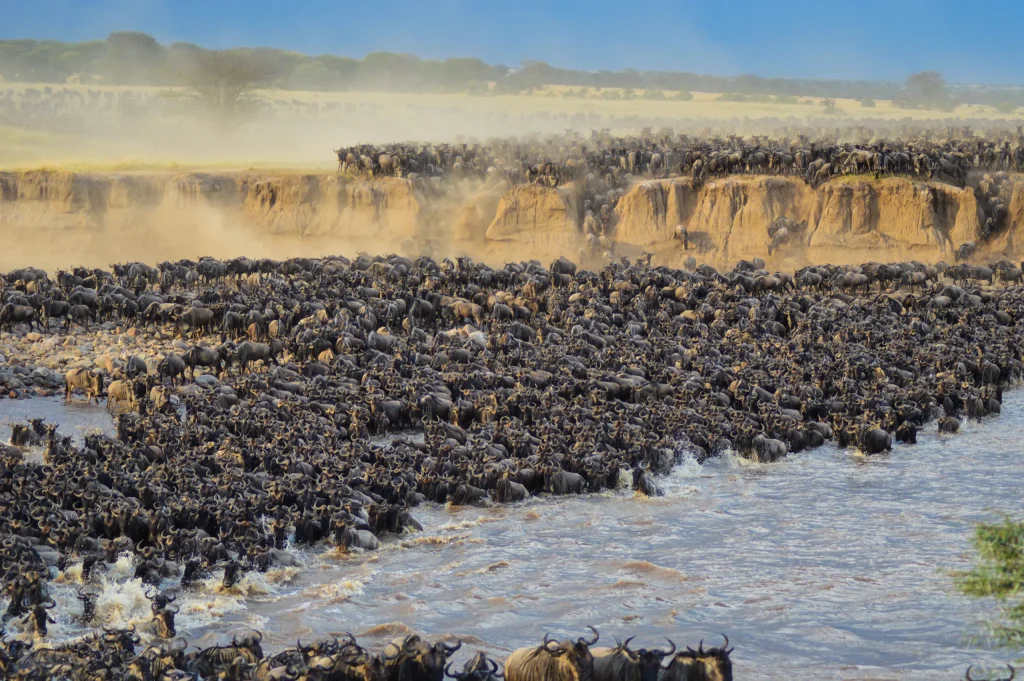
As the year progresses, the herds move towards the western corridor and then northwards depending on rainfall and pasture conditions. River crossings may occur along the Grumeti or Mara rivers but their timing and location vary from year to year.
Safari Activities in Serengeti National Park
Game drives
Game drives are the main activity in Serengeti National Park. Visitors travel in a 4×4 safari vehicle with a guide who helps them find animals, explains their behaviour and identities of different plants and habitats. The drive passes through open grasslands, acacia woodland, river valleys and rocky kopjes. Morning drives begin early when the weather is cooler and many predators are still active after hunting. Some of the animals that can be spotted include lions, hyenas, leopards and jackals. Afternoon drives provide another opportunity to observe elephants, buffaloes, giraffes, antelopes and other animals.
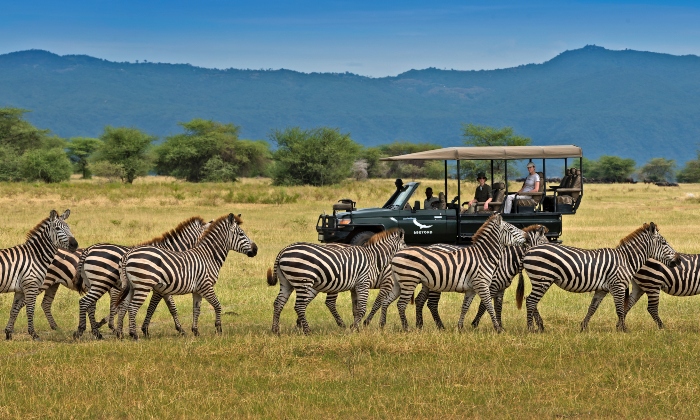
A full day game drive gives visitors more time to explore different parts of the park. The guide may stop near a river, follow animal tracks or spend time watching a herd. The central Serengeti around Seronera is known for year round game viewing. The Western Corridor offers riverine habitats around the Grumeti River while Northern Serengeti attracts visitors during parts of the great wildebeest migration. The southern plains are popular during the calving season.
Watching the great wildebeest migration
The great wildebeest migration is one of the main attractions in Serengeti National Park. Large herds of wildebeest move across the wider Serengeti ecosystem in search of fresh grass and water. Zebras and gazelles often travel alongside them. From around January to March, the southern plains and Ndutu area are calving grounds. Visitors may see newborn wildebeest, large herds grazing and predators such as lions and hyenas searching for food.
As the seasons change, the herds move towards the western and northern parts of the ecosystem. During some periods, visitors may see wildebeest gathering near the Grumeti or Mara rivers. River crossings can be dramatic but they do not happen on a fixed schedule. Some days may pass without crossing.
Hot air balloon safaris
A hot air balloon safari gives visitors a view of the Serengeti from above. The activity usually starts before sunrise when guests travel to the launch site for a safety briefing. As the balloon rises, visitors can see the grasslands, rivers, rocky hills and animals moving across the plains. Depending on the route and weather, they may spot elephants, giraffes, wildebeest and zebras.
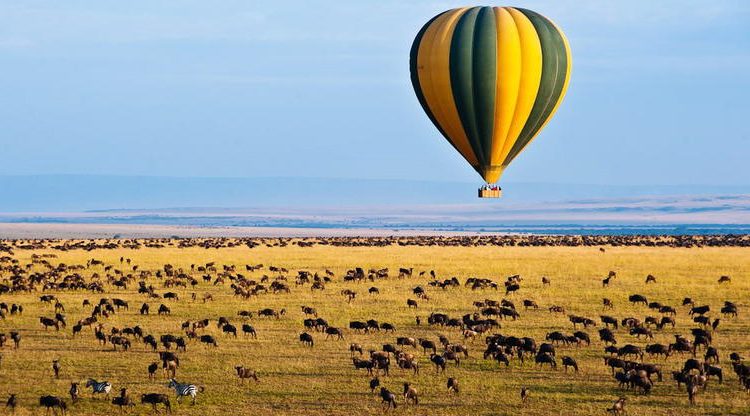
Flights usually last about an hour although conditions can affect the duration. After landing, many operators arrange breakfast before guests return to their lodge. Balloon safaris cost extra and should be booked in advance. Flights operate in selected parts of the park. Availability depends on the season, weather and operator.
Guided walking safaris
Walking safaris allow visitors to explore the bush on foot in approved areas. Accompanied by authorised guides and where required an armed ranger, visitors learn about the smaller details of the Serengeti. The guide may explain animal tracks, droppings, bird calls, insects and native plants. Visitors can also learn how animals move through the landscape and how plants survive during dry periods.
Birdwatching
Serengeti National Park has more than 500 recorded bird species. Its grasslands, woodlands, rivers and wetlands attract different birds throughout the year. On the open plains, visitors may see ostriches and secretarybirds. Woodlands support hornbills, rollers, weavers and birds of prey. Rivers and wetlands attract herons, storks, kingfishers and other waterbirds.
Birdwatching can be part of a game drive or arranged as a separate outing with a guide. The green season is often rewarding because migratory birds arrive and many resident species become active during breeding periods.
Visiting Maasai communities
Maasai communities are known for pastoral traditions, beadwork, distinctive clothing, cattle keeping and age set customs although practices vary between families and locations. Depending on the arrangements, a visit may include learning about livestock keeping, local homes, traditional crafts, music or community history. Visitors may also have an opportunity to purchase locally made crafts directly from artisans.
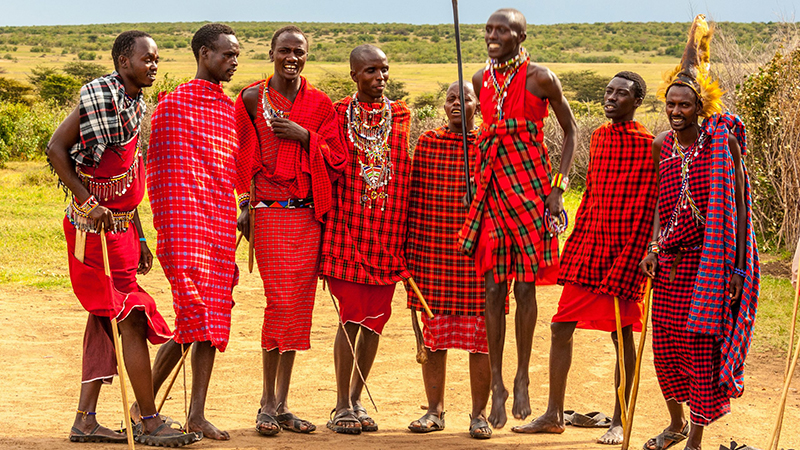
These visits are generally arranged with communities outside the core wildlife viewing areas of the national park or in neighbouring areas where cultural tourism is permitted. They should be organised with local guides or community approved operators. Visitors should ask before taking photographs and respect any restrictions on access or participation.
How to get to Serengeti National Park
Serengeti National Park is located in northern Tanzania and can be reached by road or air. Most visitors travel from Arusha, the main starting point for northern Tanzania safaris. Others fly directly to an airstrip near their lodge or approach the park from Mwanza in the west. The best route depends on where you plan to stay and which part of the park you want to explore.
Getting to Serengeti by road from Arusha
Arusha is the main gateway for road safaris to Serengeti National Park. The town has safari operators, vehicle hire services, hotels and other facilities for visitors preparing to travel into the northern safari circuit.
The drive from Arusha to Naabi Hill Gate, a common entrance to the park, covers approximately 250 kilometres and usually takes about 6 to 7 hours without long stops. The route passes through Mto wa Mbu and Karatu towards the Ngorongoro Conservation Area before reaching Naabi Hill Gate. The journey offers views of farming communities, the Ngorongoro highlands and open landscapes as the road approaches the Serengeti plains.
Many travellers combine the drive with visits to other northern Tanzania destinations. You can spend time at Lake Manyara National Park or Tarangire National Park before continuing towards Ngorongoro and Serengeti. A stop at Olduvai Gorge may also be possible when travelling between the Ngorongoro area and Serengeti.
Getting to Serengeti by air
Flying can be an option for travellers who want to spend less time on the road. Visitors usually fly into Kilimanjaro International Airport or Arusha Airport and then take a scheduled or charter light aircraft to an airstrip serving their accommodation. Kilimanjaro International Airport is located between Arusha and Moshi and serves as an international entry point for northern Tanzania safaris. Arusha Airport also handles domestic safari flights.
Serengeti has several airstrips serving different areas of the park, for instance Seronera airstrip serving in the central Serengeti. The Kogatende airstrip serves Northern Serengeti, Lobo airstrip provides access to the northeastern part of the park while Kirawira airstrip serves the Western Corridor and Kusini airstrip provides access to the southern part of the park. After landing, visitors are usually collected by a lodge vehicle or safari guide and transferred to their accommodation.
However, Serengeti has several entry gates and each serves a different part of the park. The correct gate depends on your route and accommodation. For instance Naabi hill gate is commonly used by visitors travelling from Arusha and the Ngorongoro Conservation Area. It is used by many travellers heading to the central and southern Serengeti. The Ndabaka gate serves the western side of the park and is a common option for visitors travelling from Mwanza while Fort Ikoma gate provides access to the northwestern part of the park. The Klein’s gate serves the northeastern side and routes associated with the Loliondo area.
Bologonja gate lies near the Kenya border but it is not treated as a normal tourist crossing between Serengeti and the Maasai Mara.
Best time to visit Serengeti National Park
Serengeti can be visited throughout the year but the best time depends on the wildlife experience a traveller wants. June to October is the main dry season and a popular period for general wildlife viewing. Animals can be easier to spot in areas where vegetation is thinner. The migrating herds may be in the western or northern Serengeti during parts of this period depending on rainfall.
Between January to March, the southern plains around Ndutu are used during the wildebeest calving season. The landscape is greener and predator activity can be high around the herds. During the months of November to December, there are short rains that bring fresh vegetation and greener scenery. This period can also be good for birdwatching although rain may affect some roads. From March to May there are long rains that can make certain tracks muddy and travel more difficult.