

Chimpanzee tracking is a guided forest activity where visitors walk through natural habitats to find and observe habituated chimpanzee groups. The activity allows travellers to see chimpanzees feeding, calling, climbing trees and interacting with other members of their communities. Uganda and Rwanda are among the places in East Africa where visitors can track chimpanzees in the wild. Uganda has several tracking sites with Kibale National Park being the main destination. In Rwanda, Nyungwe National Park is the main area for chimpanzee tracking.
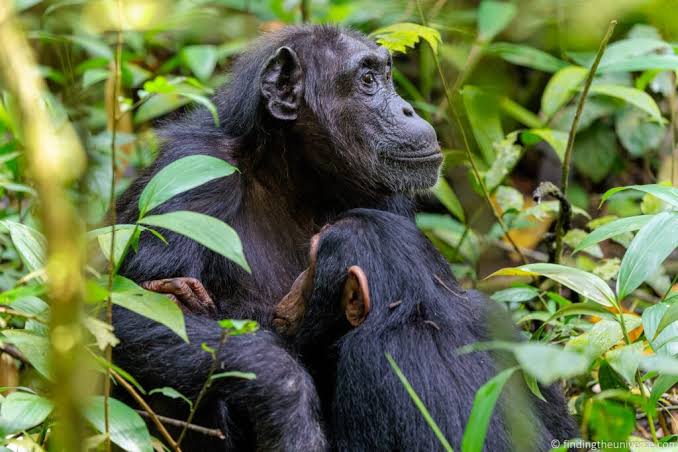
Chimpanzee tracking involves walking through the forest with trained guides and trackers in search of a habituated chimpanzee community. Before entering the forest, visitors receive a briefing about the activity and the rules to follow. Guides then lead the group along forest trails while trackers look for signs of chimpanzee activity.
These signs may include calls, feeding remains, footprints, nests and broken branches. Since chimpanzees move around the forest in search of food, the distance covered during a trek can vary. When the chimpanzees are located, visitors observe them from a safe distance. In Uganda, standard tracking normally allows up to one hour with the chimpanzees after they have been found.
Where to do chimpanzee tracking in Uganda
Kibale National Park
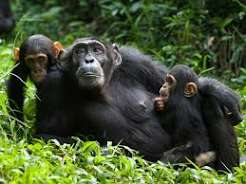
Kibale National Park is Uganda’s main chimpanzee tracking destination. The activity is based at the Kanyanchu Visitor Centre. The park has a large chimpanzee population with Uganda Wildlife Authority estimating more than 1,500 chimpanzees in the park. Several chimpanzee communities live within Kibale although only some groups are habituated for tourism.
Kibale is also an important research site. Long-term studies have helped researchers understand chimpanzee behaviour, social relationships, feeding habits and population changes. Chimpanzee tracking at Kibale can take several hours. The animals may be found close to the starting point on one day and much farther away on another.
Kyambura Gorge
Chimpanzees can also be tracked in Kyambura Gorge within Queen Elizabeth National Park. The gorge has a habituated chimpanzee community. Visitors walk down into the forested gorge with guides and search for the animals.
Kyambura provides a different setting from Kibale because the chimpanzees live in a relatively narrow forested gorge surrounded by the wider Queen Elizabeth landscape. Chimpanzee sightings are not guaranteed. The animals are wild and may move away from the area where visitors are searching.
Other Chimpanzee habitats in Uganda
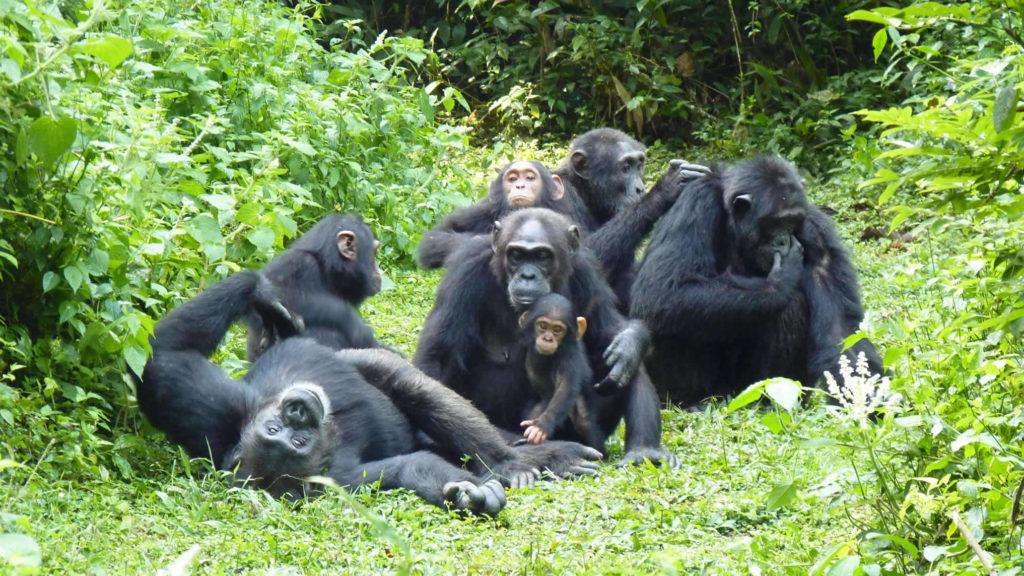
Chimpanzees also occur in forests such as Budongo, Kalinzu and Bugoma. However, not every chimpanzee population is open to tourism. Tracking is only carried out at approved sites where chimpanzee communities have been habituated and tourism has been properly organised.
Nyungwe National Park
Nyungwe National Park is Rwanda’s main destination for chimpanzee tracking. It is a large montane forest in the southwestern part of the country. Rwanda’s tourism authorities estimate that about 500 chimpanzees live in the Nyungwe ecosystem. Not all of these chimpanzees are habituated for tourism.
Tracking starts early in the morning. Visitors meet their guides before entering the forest and follow trails used to locate the chimpanzee communities. The forest has steep and sometimes muddy trails, so visitors need suitable footwear and reasonable fitness. Chimpanzee tracking can also be combined with other activities in Nyungwe including the canopy walk and colobus tracking of other primates.
Cyamudongo Forest
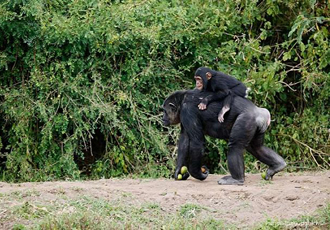
Cyamudongo is a smaller forest associated with the Nyungwe ecosystem. It supports a chimpanzee community and is another important area for chimpanzee conservation and research in Rwanda. The forest is separate from the main Nyungwe forest block, making its protection important for maintaining chimpanzee habitat.
How many chimpanzees are in the wild?
It is difficult to give an exact number of chimpanzees living in the wild because they occur across many countries and forests in Africa. The common chimpanzee is classified as Endangered and WWF estimates the wild population at about 172,700 to 299,700 individuals.
Uganda has an estimated 5,000 chimpanzees with populations in Kibale, Budongo, Bugoma and other forests. Rwanda’s Nyungwe ecosystem has an estimated 500 chimpanzees. These figures are estimates and can change as new surveys are carried out. Chimpanzee populations are difficult to count because the animals live in large forests and may travel over wide areas.
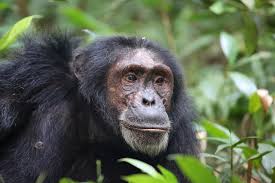
What makes chimpanzees special
Chimpanzees are great apes and are among the closest living relatives of humans. They share about 98% of their DNA with humans although this figure can vary depending on how genetic similarity is measured. Chimpanzees live in complex social communities. They communicate through calls, gestures and body movements and can form strong relationships with other members of their group.
They spend time both on the ground and in trees. Their diet mainly consists of fruits, leaves, flowers, buds and other plant foods. They can also eat insects and small animals. Chimpanzees are known for using objects as tools. Some communities have learned different ways of using sticks, stones or leaves to obtain food.
Another behaviour is nest building. Chimpanzees normally build nests in trees for sleeping and make new nests regularly.
Chimpanzee tracking and habituation experience
Uganda offers both standard chimpanzee tracking and the chimpanzee habituation experience. During normal tracking, visitors search for a chimpanzee group that is already accustomed to human presence. Once the animals are found, visitors normally have up to one hour to observe them.
The habituation experience is different. Visitors accompany researchers and habituation teams as they work with chimpanzees that are still becoming accustomed to people. The activity can allow visitors to spend several hours observing the animals and learning about the habituation process. This option is suitable for travellers who have a strong interest in chimpanzee behaviour and conservation.
How to get a chimpanzee permit
Visitors need a valid permit to take part in chimpanzee tracking at designated sites in Uganda. Permits can be arranged through the Uganda Wildlife Authority or an authorised tour operator depending on the visitor category and tracking location.
When booking, travellers should provide their preferred date and tracking location. A permit for Kibale for example is not automatically valid for Kyambura Gorge. Because visitor numbers are controlled, booking in advance is advisable especially during periods when demand is high. Travellers should make payments through official channels and keep their permit confirmation for presentation at the tracking centre.
How much does a chimpanzee permit cost
Chimpanzee permit prices in Uganda depend on the tracking location, visitor category and applicable UWA tariff. Under the revised UWA tariff taking effect from 1 January 2027, Kibale chimpanzee tracking is listed at
• USD 300 for foreign non-residents
• USD 200 for foreign residents
• USD 100 for visitors from the rest of Africa
• UGX 180,000 for East African Community citizens
The Chimpanzee Habituation Experience is listed at
• USD 400 for foreign non-residents
• USD 300 for foreign residents
• USD 250 for visitors from the rest of Africa
• UGX 250,000 for East African Community citizens
Kyambura Gorge chimpanzee tracking is listed at lower rates
• $100 for foreign non- residents
• $80 for foreign residents
• UGX100,000 for East African Community citizens.
UWA also has lower-season rates for selected months. In Rwanda, chimpanzee tracking is mainly carried out in Nyungwe National Park. Chimpanzee permits can be obtained through the Rwanda Development Board, its booking system or an authorised tour operator.
The foreign non-resident chimpanzee tracking permit costs $150 with a park entry fee of $100. However, visitors are advised to confirm the current price when making a booking because tourism tariffs can change.
Best time for chimpanzee tracking
Chimpanzee tracking is available throughout the year in both Uganda and Rwanda. The drier months are generally easier for walking because trails are less muddy. In Uganda, these months usually include June to August and December to February.
However, the wet season can also be useful for tracking. In Kibale, rainfall can affect chimpanzee movements and food availability so their location may change with the season. Rwanda’s main dry period is generally from June to September. Nyungwe remains a rainforest, however, so rain can occur even during the drier months. The best time therefore depends on whether a visitor gives greater importance to easier trails or is comfortable walking in wetter conditions.
What to pack for chimpanzee tracking
Chimpanzee tracking takes place in forests with uneven ground, thick vegetation and muddy trails. Visitors should pack items that are suitable for walking. Useful items include
• Strong hiking boots
• Long trousers
• Long-sleeved shirts
• Waterproof jacket or poncho
• Gaiters
• Lightweight gloves
• Hat or cap
• Insect repellent
• Reusable water bottle
• Small backpack
• Camera and spare batteries
• Walking stick if needed
• Personal medication
It is better to avoid carrying unnecessary luggage because visitors may spend several hours walking through the forest.
Chimpanzee tracking rules
Chimpanzee tracking has rules that help protect both visitors and animals. Visitors should
• Follow the instructions of guides and trackers.
• Keep the required distance from chimpanzees.
• Avoid touching or feeding the animals.
• Keep noise to a minimum.
• Avoid flash photography.
• Do not leave rubbish in the forest.
• Avoid tracking when suffering from an infectious illness.
• Stay with the authorised group.
• Use the designated trails.
• Follow instructions if chimpanzees move closer.
Disease prevention is particularly important because chimpanzees can catch some human diseases.
Uganda or Rwanda for chimpanzee tracking
Both Uganda and Rwanda provide opportunities to see chimpanzees in natural forest habitats. Uganda offers more tracking locations and a larger chimpanzee tourism programme. Kibale is particularly important because of its large chimpanzee population, long history of research and the availability of the Chimpanzee habituation experience.
Rwanda’s main destination is Nyungwe National Park where chimpanzee tracking can be combined with other forest activities. The choice can therefore depend on the rest of the safari. Someone planning a Uganda primate safari may prefer Kibale while a traveller exploring Rwanda’s forests can include chimpanzee tracking in a Nyungwe itinerary.