

Ngorongoro Conservation Area is located in the Arusha Region. It lies west of Arusha town and forms part of the wider Serengeti ecosystem. The protected area lies in northern Tanzania between the Great Rift Valley highlands and the plains of Serengeti National Park. The area is famous for Ngorongoro Crater, a large volcanic caldera.
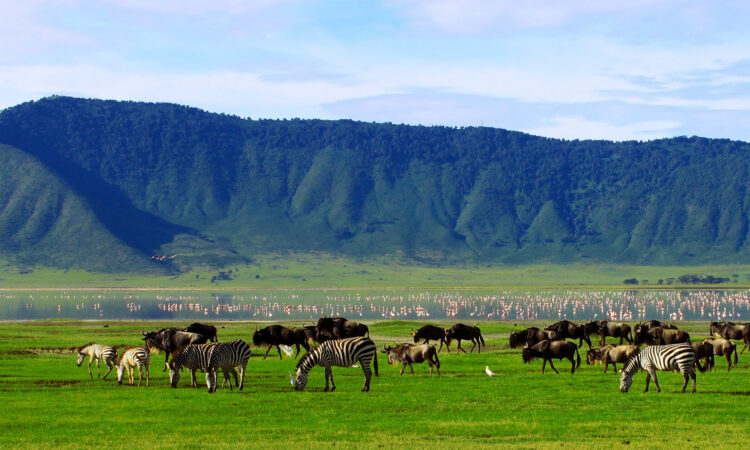
The conservation area was established in 1959. It is a UNESCO World Heritage Site recognised for its wildlife, volcanic landscapes, archaeological discoveries and the long-standing presence of Maasai pastoral communities. Unlike a national park managed mainly for wildlife, Ngorongoro is a multiple use conservation area where wildlife conservation takes place alongside authorised human activities and traditional livestock keeping.
The area covers approximately 8,292 square kilometres. Its landscapes include open grasslands, highland forests, volcanic craters, woodlands and seasonal lakes. These different habitats support a wide range of animals and birds.
Flora in Ngorongoro Conservation Area
Ngorongoro’s vegetation life changes with altitude, rainfall and soil conditions. Grasslands dominate many open areas while forests grow on wetter slopes and around parts of the highlands. The crater floor contains grasses that feed wildebeest, zebras, gazelles and other herbivores. Wetlands and swamps support plants suited to waterlogged ground while woodland areas provide shade and food for different animals.
Higher elevations have montane forests with a wider variety of trees, shrubs and climbing plants. These forests are habitats for birds and forest dwelling wildlife. The vegetation also helps protect the soil and maintain water sources that support animals and nearby communities.
Wildlife in Ngorongoro Conservation Area
Ngorongoro supports a wide range of mammals, reptiles and birds. The area hosts the Big Five which include lion, leopard, elephant, buffalo and rhinoceros. Other Mammals that call Ngorongoro home include zebras, wildebeest, Thomson’s gazelles, Grant’s gazelles, elands, warthogs, spotted hyenas, jackals, Hippos, cheetahs, giraffes, among others.
Ngorongoro also has over 500 bird species. Its different habitats attract both resident and migratory species. Some of the birds that can be spotted include Grey-breasted Spurfowl, Lesser Kestrel, Augur Buzzard, ostriches, Pallid Harrier, Long-crested Eagle, European Swallow, Superb Starling, European Bee-eater, kori bustards, Rufous-tailed Weaver, White-backed Vulture, crowned cranes, flamingos, Montagu’s Harrier, pelicans, Denham’s Bustard, White-headed Vulture, eagles, Lappet-faced Vulture, Hooded Vulture, among others
Things to do in Ngorongoro Conservation Area
Game drives in Ngorongoro Crater
Game drives in Ngorongoro Crater are one of the main activities for visitors. The crater floor contains open grasslands, swamps, woodland and Lake Magadi. These habitats attract large numbers of grazing animals and the predators that hunt them. Visitors descend from the crater rim in a safari vehicle and follow authorised roads across the crater floor. An early morning drive may provide opportunities to see lions resting in the grass, zebras grazing in open areas and buffaloes gathering near wetlands.
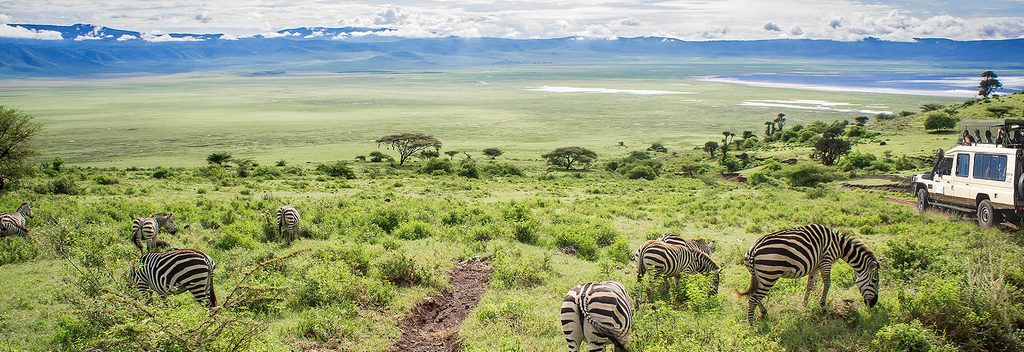
Black rhinoceroses also live in the crater although sightings can be difficult because the animals may remain at a distance. Elephants occur in the wider conservation area, but they are less predictable on the crater floor. Lake Magadi is another area of interest. Depending on water conditions, visitors may see flamingos and other waterbirds along its shallow shoreline. Hippos can be found in suitable water bodies within the crater.
Visit Olduvai Gorge
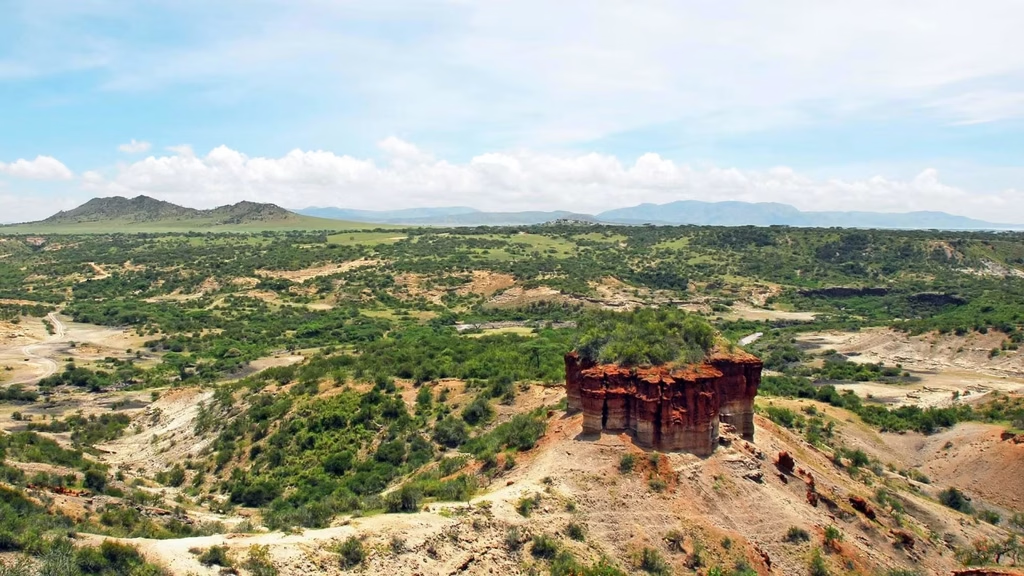
Olduvai Gorge is an archaeological and palaeoanthropological site in the wider conservation area. Fossils and stone tools discovered here have helped researchers study early humans, their ancestors and the environments in which they lived. Visitors can explore the site’s interpretive facilities and learn about discoveries made by researchers, including Louis and Mary Leakey. The exhibits explain how fossils, ancient tools and geological layers help scientists reconstruct the past.
For example, visitors can learn how researchers use stone tools to investigate early human behaviour and how fossil remains provide evidence about the species that lived in the region millions of years ago. The surrounding gorge also helps demonstrate how layers of volcanic ash and sediment preserve evidence of ancient environments.
Nature walk to Empakaai Crater
Empakaai Crater is a volcanic crater in the Ngorongoro highlands. Its steep walls surround a lake that can attract flamingos when conditions are suitable. Visitors can take a guided walk towards viewpoints overlooking the crater and lake. The route passes through highland vegetation and provides views of the surrounding landscape.
For example, along the way, visitors may stop to observe forest plants, listen for birds or photograph the crater from an elevated viewpoint. If flamingos are present, they may be visible around the lake although their presence varies with water levels and other conditions. The walk includes steep sections so sturdy shoes and a reasonable level of fitness are important.
Explore Olmoti Crater
Olmoti Crater is another volcanic feature in the Ngorongoro highlands. It has a grassy interior and slopes covered with natural vegetation. A guided walk takes visitors through the highlands towards viewpoints overlooking the crater. Along the way, guides may explain the area’s volcanic history, local vegetation and the way rainfall influences the landscape. They may also learn how volcanic activity shaped the crater and the surrounding terrain.
Birdwatching
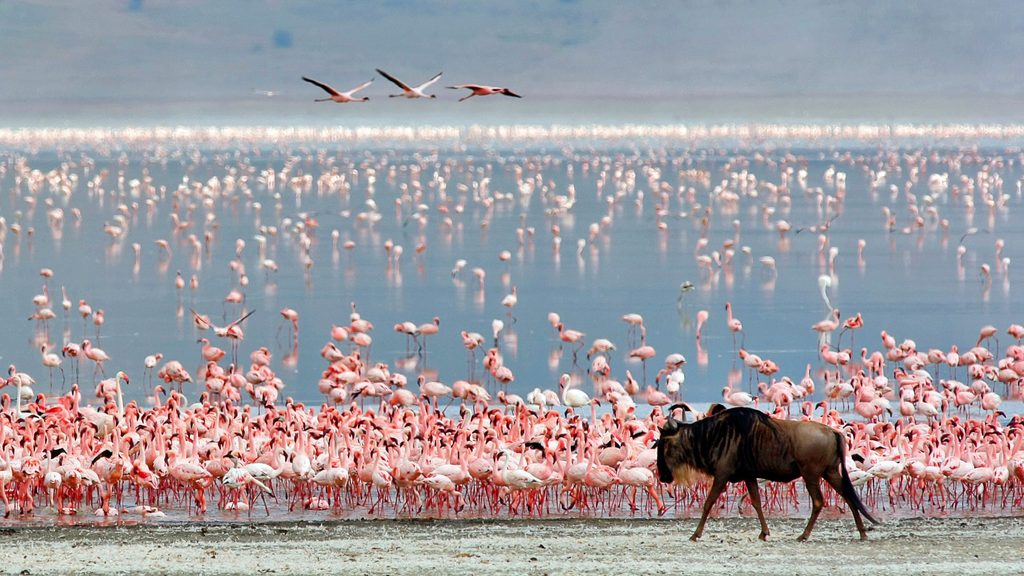
Ngorongoro’s grasslands, wetlands, forests and lakes support over 550 bird species including resident and migratory birds. Visitors can look for birds during a game drive or spend more time exploring suitable habitats with a guide who knows the local species. Examples of birds that can be spotted include Lesser Kestrel, ostriches, Long-crested Eagle, European Swallow, Superb Starling, kori bustards, Rufous-tailed Weaver, European Bee-eater, African White-backed Vulture, Pallid Harrier, crowned cranes, flamingos, Montagu’s Harrier, pelicans, Denham’s Bustard, Augur Buzzard, Grey-breasted Spurfowl, White-headed Vulture, eagles, Lappet-faced Vulture, Hooded Vulture, among others
Visit Maasai community
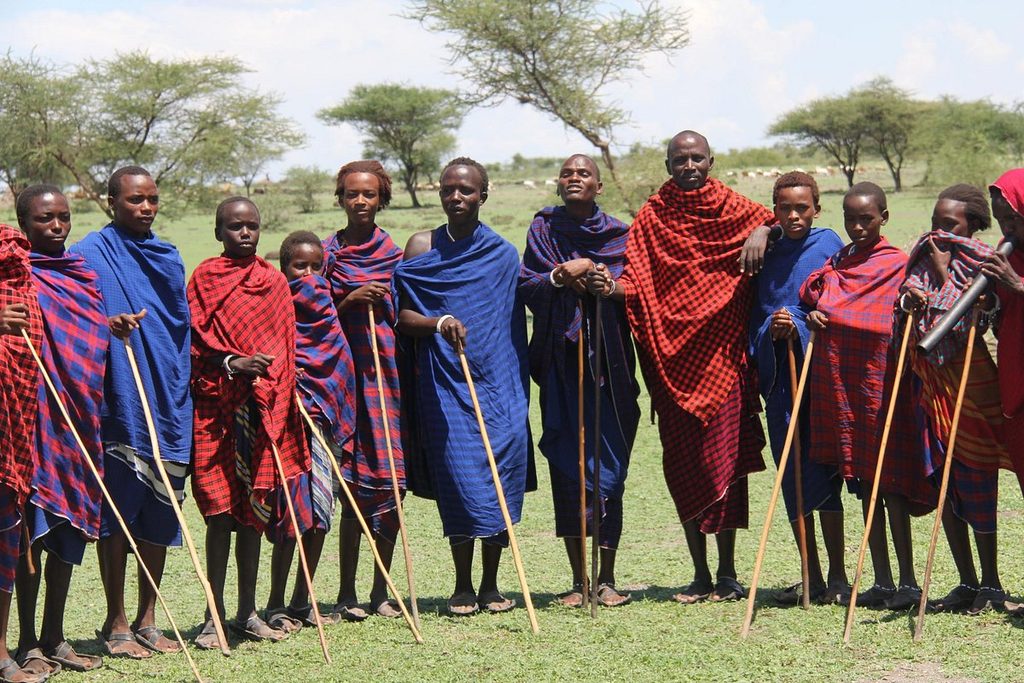
Maasai communities have a long history in the Ngorongoro region. Pastoralism remains vital to many families with cattle, goats and sheep playing a role in daily life and cultural identity. An organised cultural visit can introduce visitors to local traditions, beadwork, livestock keeping, traditional homes and community life. The exact activities depend on the host community and the visit arranged.
For example, a local host may explain why cattle are important to Maasai households, demonstrate beadwork techniques or describe how traditional homes are constructed using locally available materials. Visitors may also learn about clothing, ceremonies and customs that community members choose to share. These visits offer a chance to learn directly from people who live in the area. However, Maasai communities are not all the same and traditions can differ between families and locations.
Visit a Maasai Boma
A Maasai boma is a traditional homestead. A cultural visit can help travellers understand how a homestead is arranged and how livestock and family life are connected. Depending on the hosts, visitors may be shown traditional house construction, learn about the use of local materials or hear explanations of daily pastoral activities. Some visits also include demonstrations of beadwork or explanations of traditional dress.
For example, a host might explain how cattle are managed, how a household protects its livestock or how beadwork is made and used. Visitors can ask questions and learn about the changes that communities experience as tourism, education and modern services become more accessible. Arrange the visit through a responsible operator and confirm that the community welcomes visitors. Ask permission before photographing people or entering private spaces.
How to get to Ngorongoro Conservation Area
Ngorongoro Conservation Area is located in northern Tanzania, west of Arusha and south of Serengeti National Park. Most visitors reach the area by road using Arusha as their starting point. Others arrive by air and connect to a safari vehicle for the journey to the crater highlands. The route you take depends on where your safari begins. Travellers arriving internationally often start from Kilimanjaro International Airport while those already exploring northern Tanzania can travel from Arusha, Lake Manyara or Serengeti.
From Arusha, the journey is approximately 160 to 180 km depending on your destination within the conservation area and generally takes around 3 to 4 hours in normal conditions. Travel may take longer if you stop along the way or encounter poor road conditions. The route runs west from Arusha towards Mto wa Mbu and continues through the Karatu area and climbs into the Ngorongoro highlands. The scenery changes as you leave the busier surroundings of Arusha and approach farmland, forested slopes and open highland landscapes.
Travelers are advisable to use a 4×4 safari vehicle. This is particularly useful on rougher roads and when travelling to the crater floor.
Best time to visit Ngorongoro Conservation Area
Ngorongoro can be visited throughout the year but the experience changes with rainfall, vegetation and wildlife movements. From June to October is the main dry season across much of northern Tanzania. Grass may be shorter in some areas and wildlife can be easier to spot around reliable water sources. Between November and December, the short rains usually bring fresh grass and greener scenery. Rainfall varies from year to year and some roads may become muddy. During the months January to March is the period when wildebeest calving often takes place in Ndutu plains. From March to May, the long rains generally bring wetter conditions. Landscapes become green but heavy rain may affect road conditions and travel times.